Uncategorized
How to Choose the Right Firefighter Bunker Boots for Your Department
Dec
Why bunker boots matter for departments
Bunker boots are more than just footwear; they are part of the structural firefighting PPE system that protects firefighters from burns, punctures, slips, and long-term joint damage. Poor boot selection can increase injury risk, slow crews down, and lead to expensive replacements sooner than expected.
For departments, choosing the right firefighter bunker boots means balancing NFPA-compliant safety features, durability, weight, and comfort while staying within budget and accommodating different members’ needs.
Know your department’s mission profile
The first step in selecting bunker boots is understanding how and where they will be used. Not every department faces the same operational demands, and boot choices should reflect those realities.
Key questions to ask:
-
Does your department primarily handle structural fires, vehicle fires, or a broad all-hazards response profile?
-
Do members regularly operate in rural, industrial, high-rise, or wildland-urban interface environments?
-
Are calls typically short in duration, or do crews remain on scene for extended periods?
Departments with frequent interior attacks and long-duration incidents may prioritize lighter, more supportive boots to manage fatigue, while departments with heavy industrial exposure may favor maximum puncture and chemical resistance.
Understand NFPA safety requirements
Firefighter bunker boots used for structural firefighting must meet relevant safety standards that specify performance for flame resistance, heat insulation, slip resistance, and impact protection. These standards ensure a minimum level of protection for all certified boots.
When comparing boots, departments should confirm:
-
Certification for structural firefighting use (not just station or wildland boots).
-
Published test results for flame and heat exposure.
-
Requirements for toe protection, sole puncture resistance, electrical hazard performance, and traction.
Purchasing non-compliant boots may expose the department to liability and put firefighters at unnecessary risk, so certification markings and documentation should always be verified.
Leather vs rubber bunker boots
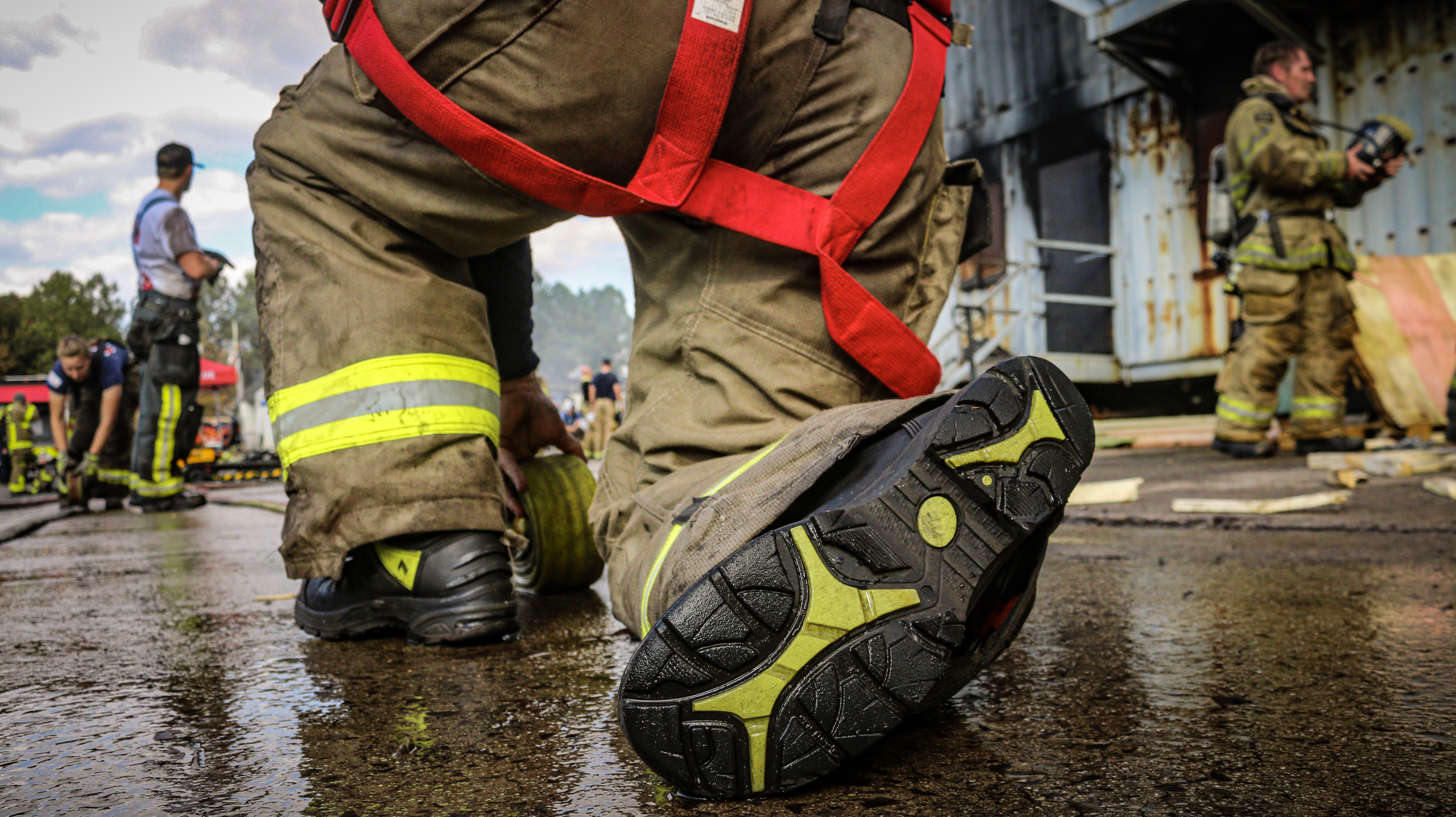
Most firefighter bunker boots are built from either leather or rubber (sometimes with hybrid designs). Each material type has distinct advantages and trade-offs that departments should consider.
Rubber bunker boots
-
Highly resistant to water, many chemicals, and biological contaminants.
-
Typically easier to decontaminate after fires or hazmat exposures.
-
Often more affordable and rugged for harsh conditions.
-
Can be heavier and stiffer, which may contribute to fatigue over long shifts.
Leather bunker boots
-
Generally lighter and more flexible than rubber, improving comfort and mobility.
-
Often provide better ankle support and a more “athletic” feel.
-
May offer improved long-term comfort for frequent wearers when properly broken in.
-
Require more maintenance and care to preserve water resistance and longevity.
Departments that prioritize easy decon and high durability in wet or contaminated environments may lean toward rubber, while those focused on comfort and long shifts may prefer leather or hybrid designs.
Pull-on vs zip and laced designs
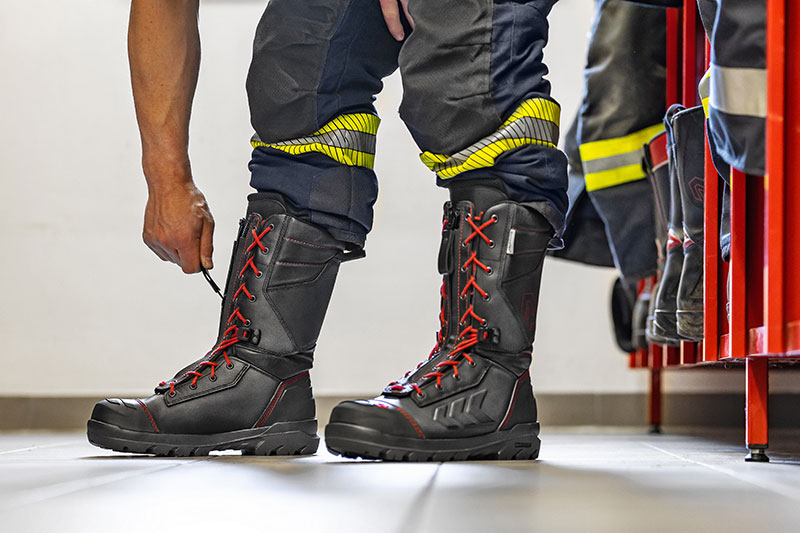
The way bunker boots go on and off affects both speed of turnout and long-term fit. There are three main closure styles: pull-on, side-zip, and lace-up (sometimes combined).
Pull-on boots
-
Traditional style with handles or grips for quick donning.
-
Simple, durable design with fewer parts to fail.
-
Fit is mostly determined by sizing and boot shape, with limited fine adjustment.
Side-zip boots
-
Combine laces or a snug upper with a zipper for quick on/off.
-
Allow more customized fit over the foot and ankle while maintaining fast turnout.
-
Require periodic inspection and maintenance of the zipper for reliability.
Lace-up (with or without zip)
-
Provide the most adjustable and secure fit, especially around the ankle and lower leg.
-
Can improve support and reduce foot movement inside the boot.
-
May be slower to don if not paired with a zipper system.
Departments should decide whether speed, simplicity, or fine-tuned support is the higher priority based on response patterns and personnel preferences.
Key safety features to evaluate
Beyond basic materials and closures, several safety features separate average bunker boots from high-performing models. When evaluating boots, focus on:
-
Toe protection: Steel or composite safety toes protect from crush injuries. Composite options reduce weight and don’t transfer cold as much as metal.
-
Puncture-resistant midsoles: Plates or layers designed to prevent nails, glass, and debris from penetrating the sole are essential for structural firefighting.
-
Slip-resistant outsoles: Aggressive tread patterns and high-friction rubber compounds reduce the risk of slips on wet, oily, or uneven surfaces.
-
Heat and flame resistance: Outsoles, uppers, and stitching must withstand high temperatures without melting, dripping, or failing.
-
Electrical hazard properties: Some boots provide additional insulation to help reduce electrical shock risk in certain environments.
Each of these elements contributes to overall risk reduction on the fireground and should be reviewed against your department’s typical hazards.
Comfort, fit, and long-term health
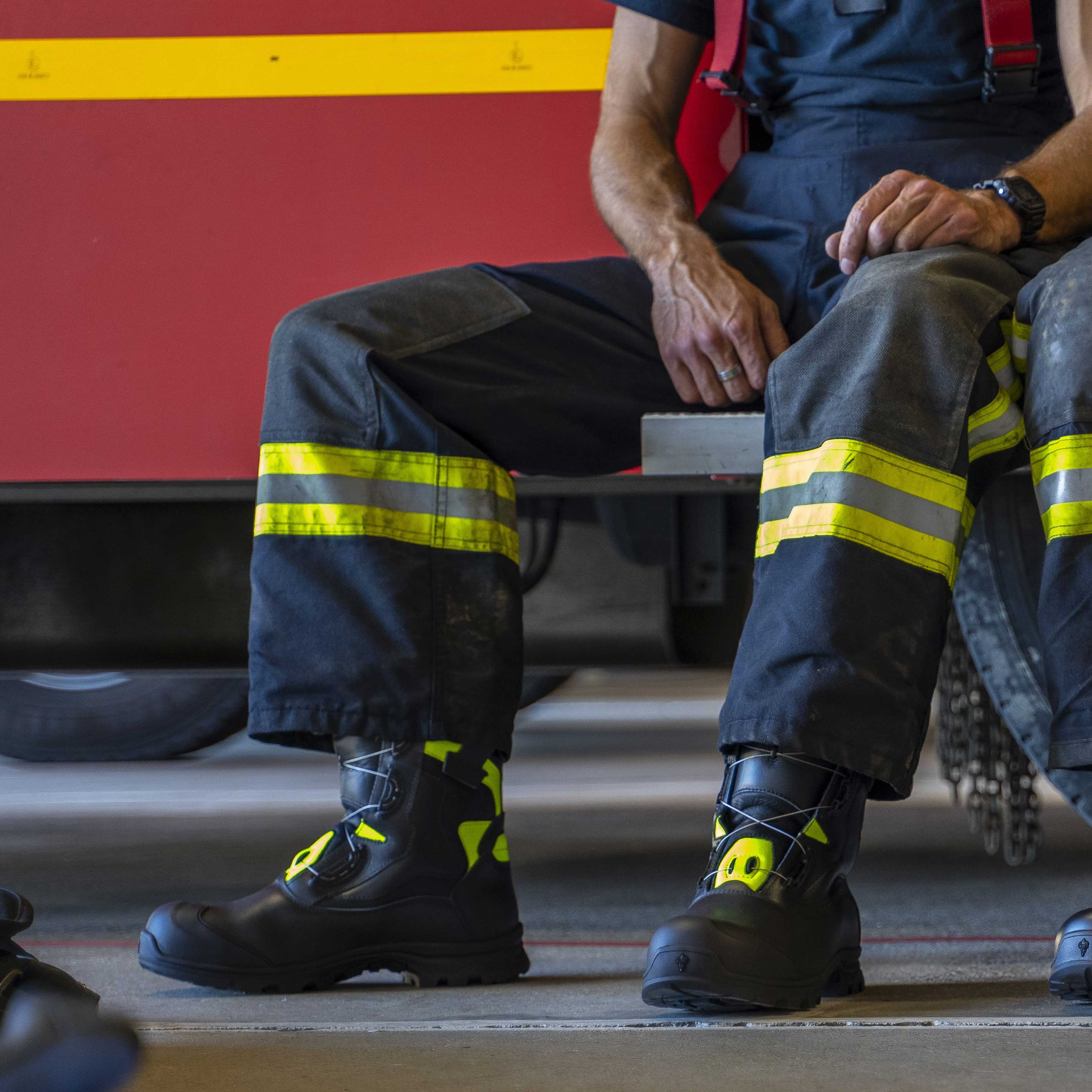
Uncomfortable bunker boots do more than annoy firefighters—they can lead to blisters, chronic pain, and long-term injuries involving the knees, hips, and lower back. Choosing boots that support foot health can reduce injury rates and time off.
Important comfort factors include:
-
Weight: Lighter boots reduce fatigue, especially during long incidents, stair climbs, and training.
-
Ankle and arch support: Proper support stabilizes the foot, improving balance and reducing strain.
-
Cushioning and insoles: Quality footbeds and shock-absorbing midsoles increase comfort during impact and prolonged standing.
-
Interior lining and moisture control: Linings that manage sweat and reduce friction help prevent blisters and hot spots.
Departments should plan for members to try on multiple sizes and widths, ideally with their usual socks and turnout pants, and perform realistic movements—crawling, climbing, and squatting—before final selection.
Sizing and inclusive fit for all members
A department’s boot program must serve firefighters of different foot sizes, shapes, and biomechanics. Ignoring this can leave some members struggling with poor fit or unsafe modifications.
Best practices include:
-
Offering a full size range, including half sizes and multiple widths where possible.
-
Providing fittings for new recruits and during periodic gear replacement cycles.
-
Recognizing that some firefighters may need orthotics or specialized insoles and ensuring boots have removable footbeds and adequate volume to accommodate them.
-
Including women-specific or more anatomically varied sizing options when available, rather than forcing all members into a single last shape.
An inclusive approach to sizing improves safety, performance, and morale by ensuring everyone has gear that truly fits.
Durability, maintenance, and decontamination
Boots that meet safety standards on paper still must stand up to daily use, cleaning, and decon. Departments should consider how boots will perform over time, not just out of the box.
Points to evaluate:
-
Stitching quality and reinforcement at high-stress areas like toes, heels, and flex points.
-
Sole bonding and how well the outsole is attached to the upper.
-
Resistance to common contaminants, including fuels, oils, blood, and soot.
-
Ease of cleaning and decontamination, especially for departments with strong cancer-prevention programs.
Rubber boots usually clean and decon more easily, while leather boots require careful cleaning and conditioning to maintain resistance and flexibility. Departments should align boot choice with their contamination control and washing capabilities.

Budget, lifecycle cost, and warranties
Sticker price is only one part of bunker boot cost. Departments should take a lifecycle view: how long will boots realistically last under typical use, and what kind of support does the manufacturer provide?
Key budget-related considerations:
-
Expected service life based on call volume and environment.
-
Repair options such as resoling or component replacement, when allowed by standards and manufacturer guidelines.
-
Warranty coverage for defects in materials and workmanship.
-
Bulk purchasing or contract pricing opportunities for larger departments.
A slightly higher upfront cost may pay for itself through longer service life, fewer injuries, and higher user satisfaction compared to cheaper, less durable options.
Involving firefighters in the selection process
Boots that look good on a spec sheet may fail in real use if firefighters are not part of the evaluation process. Including end users increases buy-in and leads to better choices.
Practical steps:
-
Request sample pairs from multiple brands and models for field trials.
-
Have firefighters wear them during drills, live burns, and routine calls for a defined period.
-
Collect structured feedback on comfort, traction, weight, ease of donning, and perceived protection.
-
Consider forming a small selection committee with representation from different shifts, ranks, and body types.
This approach helps identify issues that may not appear in technical specs alone and ensures the selected boot genuinely works for the people who will rely on it.
Building a replacement and tracking program
Once the right bunker boots are chosen, departments should implement a clear replacement and tracking plan to maintain safety over time.
Key elements:
-
Assign boots to individuals and record size, model, and issue date.
-
Schedule regular inspections for damage, wear, and sole integrity.
-
Define criteria for mandatory replacement, such as sole separation, degraded uppers, major tears, or contamination that cannot be remediated.
-
Align boot replacement with broader PPE rotation cycles to manage budgeting more predictably.
A structured program ensures firefighters are not left in worn-out or unsafe boots simply because replacement wasn’t tracked or prioritized.
Bringing it all together for your department
Choosing the right firefighter bunker boots for your department means balancing safety standards, field performance, comfort, durability, and cost while recognizing the diverse needs of your crews. Departments that take time to understand their mission profile, involve firefighters in real-world testing, and look beyond initial price will end up with boots that protect better, last longer, and keep firefighters healthier over their careers.
By treating bunker boots as critical life-safety equipment rather than just another purchase line, leadership can significantly improve both operational performance and long-term firefighter well-being.
